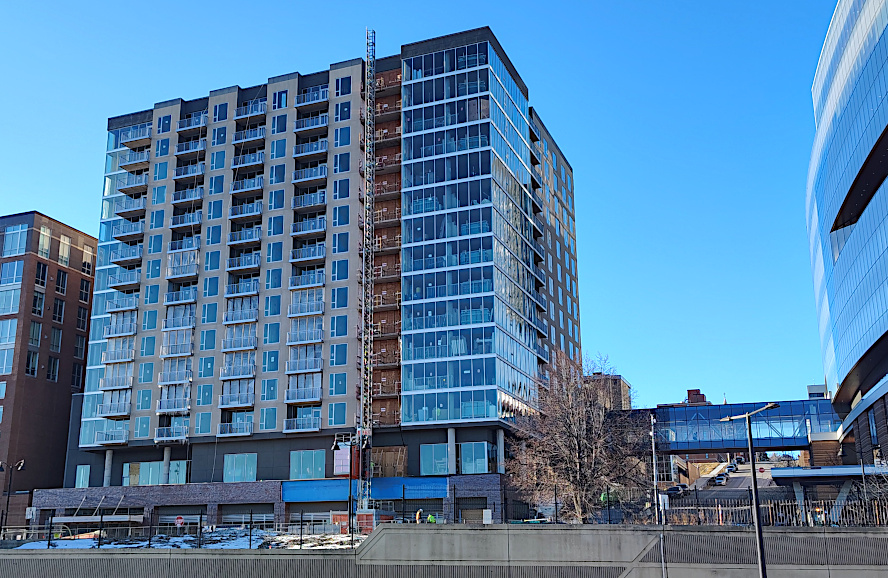
According to property sales information filed with the St. Louis County Recorder’s Office, Harmony Group LLC has purchased four parcels of land along Morris...
On Feb. 23, 2026, Duluth Public Works Director Jim Benning and Utility Programs Coordinator Ryan Granlund gave a presentation to the Duluth City Council...
At the Duluth City Council’s agenda session on Feb. 19, 2026, councilors reviewed Resolution 110, which will award $52,000 to the Duluth Entertainment Convention...
I love how you so clearly explain each case, then summarize how much spent, how much received, and what went wrong–where the city slipped up. Going forward, the city can refer this this list of past mistakes to improve their ongoing grants. That’s what I would do, use this valuable reference, to keep my direction amid happy promises and fountains of words. The Duluth Monitor is SUCH a public service!–whether one cares about integrity in government or just not wasting public money.
Not directly. The Riverwest development originally moved forward with the City’s blessing, but the developer later changed course and the City allowed those changes without enforcing its own rules.
As of now, 20 parcels have been developed, and 18 of them list a taxpayer address that is different from the parcel address. Only two parcels share the same address as the property itself. This strongly suggests that 18 of the 20 units are either second homes or income properties, not primary residences.
Most, if not all, of these units have interim use permits, which are required for vacation-type housing. However, these permits were issued without the owners appearing before the Planning Commission, despite that appearance being a requirement under City rules.
There is also a contradiction in how the City classifies the units. When asked, the City has described them as hotels. But if they are truly hotels, interim use permits would not be required at all. The fact that interim use permits were issued suggests the City itself treats them as vacation rentals, not hotels. Also a hotel needs a 24 hour attendant and five units under one company or groups control which none of these units have.
Additionally, interim use permits are subject to an annual quota. The City allows 10 permits per year or 10% of net new housing per year, with an overall cap of 120 units. The City is believed to be close to that maximum. None of the Riverwest units have been counted against this quota, even though they appear to qualify. Since then, the City has imposed a moratorium on new vacation rental units, making the Riverwest approvals stand out even more. All RIverwest vacation rentals did not have to wait in line like all other properties wanting to turn them int vacation rentals.
In short, Riverwest appears to be a case where the City placed itself in this position by not requiring a local investment group to follow the same rules applied to others. Bill Burns is both an attorney and an investor in the development. When the group was unable to secure approval for a traditional hotel, it appears they proposed this alternative arrangement, which the City allowed without proper oversight.
At this point, it may take another developer attempting the same approach—and challenging the City legally—to force a clear explanation, based on Riverwest having effectively received a special deal.
This report card is interesting, but it is missing another one, Riverwest! A failed development that promised hotels and many commercial businesses. What we have is one of the investors’ commercial business, Ski Hut, and a touristy dairy products business. No hotel as promised, so let’s just build the same building 30 times and market them as income property for folks to buy and rent out as vacation rentals. That’s what’s happened.
The boat landing as a park that the City pushed didn’t happen due to public outcry and BNSF not allowing a vehicle crossing. Thanks to BNSF for saving the shores of our freshwater estuary over another park with parking and cars everywhere destroying the sensitive shoreline and critters that enjoy the area.







I love how you so clearly explain each case, then summarize how much spent, how much received, and what went wrong–where the city slipped up. Going forward, the city can refer this this list of past mistakes to improve their ongoing grants. That’s what I would do, use this valuable reference, to keep my direction amid happy promises and fountains of words. The Duluth Monitor is SUCH a public service!–whether one cares about integrity in government or just not wasting public money.
Was city funding for the development below Spirit Mountain the same kind of deal? taxpayers build infrastructure for corporate profit?
Not directly. The Riverwest development originally moved forward with the City’s blessing, but the developer later changed course and the City allowed those changes without enforcing its own rules.
As of now, 20 parcels have been developed, and 18 of them list a taxpayer address that is different from the parcel address. Only two parcels share the same address as the property itself. This strongly suggests that 18 of the 20 units are either second homes or income properties, not primary residences.
Most, if not all, of these units have interim use permits, which are required for vacation-type housing. However, these permits were issued without the owners appearing before the Planning Commission, despite that appearance being a requirement under City rules.
There is also a contradiction in how the City classifies the units. When asked, the City has described them as hotels. But if they are truly hotels, interim use permits would not be required at all. The fact that interim use permits were issued suggests the City itself treats them as vacation rentals, not hotels. Also a hotel needs a 24 hour attendant and five units under one company or groups control which none of these units have.
Additionally, interim use permits are subject to an annual quota. The City allows 10 permits per year or 10% of net new housing per year, with an overall cap of 120 units. The City is believed to be close to that maximum. None of the Riverwest units have been counted against this quota, even though they appear to qualify. Since then, the City has imposed a moratorium on new vacation rental units, making the Riverwest approvals stand out even more. All RIverwest vacation rentals did not have to wait in line like all other properties wanting to turn them int vacation rentals.
In short, Riverwest appears to be a case where the City placed itself in this position by not requiring a local investment group to follow the same rules applied to others. Bill Burns is both an attorney and an investor in the development. When the group was unable to secure approval for a traditional hotel, it appears they proposed this alternative arrangement, which the City allowed without proper oversight.
At this point, it may take another developer attempting the same approach—and challenging the City legally—to force a clear explanation, based on Riverwest having effectively received a special deal.
This report card is interesting, but it is missing another one, Riverwest! A failed development that promised hotels and many commercial businesses. What we have is one of the investors’ commercial business, Ski Hut, and a touristy dairy products business. No hotel as promised, so let’s just build the same building 30 times and market them as income property for folks to buy and rent out as vacation rentals. That’s what’s happened.
The boat landing as a park that the City pushed didn’t happen due to public outcry and BNSF not allowing a vehicle crossing. Thanks to BNSF for saving the shores of our freshwater estuary over another park with parking and cars everywhere destroying the sensitive shoreline and critters that enjoy the area.
I can’t wait to rent out a room at Lakeview for a few nights. The views will be awesome.